The best vegetables to grow on a north-facing balcony are usually leafy greens, herbs, and fast-growing root crops picked young, not sun-loving fruiting crops such as tomatoes or peppers. In shade, the aim changes: grow tender leaves and compact crops in containers, making use of reflected light from walls, railings, and nearby buildings.
This guide is for apartment balconies with limited space and little direct sun. Because no live web research was available for this outline, it does not include exact yield promises, precise sun-hour claims, or named study results. Use it as a practical guide to choosing crops that suit a shaded container garden: small, edible, and realistic.
What a North-Facing Balcony Can Realistically Grow
Judge the light first. A north-facing balcony is not automatically a poor growing space, but it does change what will succeed. Focus on edible leaves and leafy vegetables, tender stems, herbs, and small roots instead of heavy fruiting plants. In practical terms, the best vegetables for a north-facing balcony are usually cool-season crops: plants grown for leaves or roots rather than sun-hungry fruit.
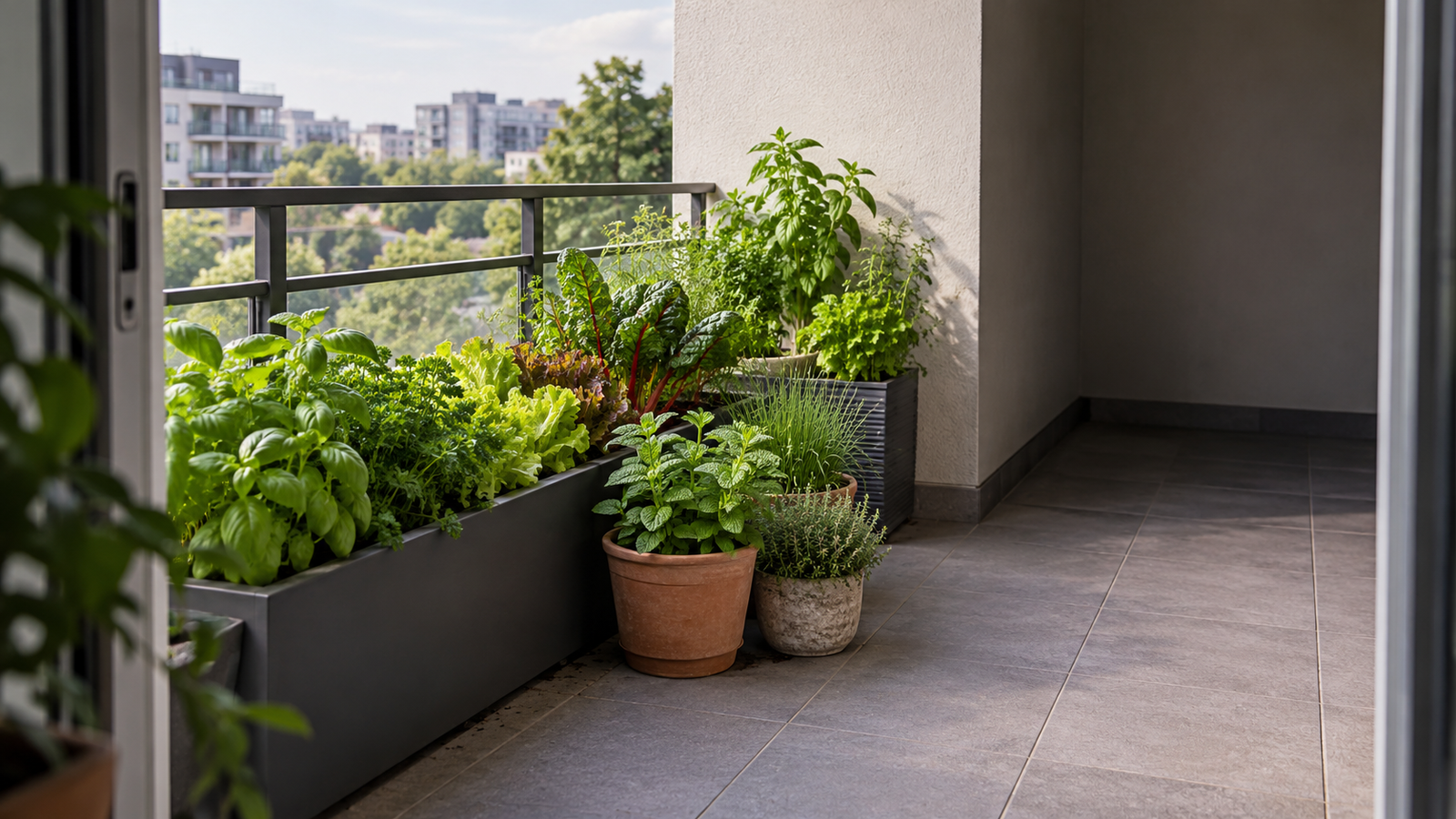
The key difference is not simply “sun” versus “shade.” Direct sun means the sun’s rays land on the plant. Bright shade means the balcony is shaded but still open and luminous, like a spot where you could read comfortably beside a large window. Reflected light is light that bounces from pale walls, windows, balcony floors, or nearby buildings.
That is why one apartment balcony may grow lettuce and parsley fairly well while another struggles. A balcony open to the sky with pale walls can behave like a soft lightbox. A dark recessed balcony under a deep overhang is closer to the back of a cabinet. The compass direction is the same; the growing conditions are not.
Grow tomatoes, peppers, squash, cucumbers, and eggplant as trials, not as the main plan, in a low-light balcony garden. These crops usually need stronger light to flower and fruit well. Standard sunny-garden advice can disappoint when applied to containers on a shaded balcony. For herbs, many of the same setup principles apply as those covered in Balcony Herb Garden for Beginners: The Ultimate 2024.
The quick balcony light test
Before buying plants, map the light you actually have. This simple test helps you place containers in the brightest usable spots instead of relying on the balcony’s direction alone.
- Look at the balcony several times across a clear day and note whether any direct sun reaches the floor, wall, railing, or plant shelf.
- Identify the brightest zone, even if it is only bright shade near the outer railing.
- Check for reflected light from pale walls, glass doors, windows, or light-colored flooring.
- Place containers where plants get the widest view of the open sky, not tucked against the darkest back wall.
- If the space stays dim all day, prioritize leafy greens, mint-family herbs, and small root crops over fruiting vegetables.
- Bright, open balcony: try lettuce, leafy herbs, arugula, and young radishes.
- Recessed but still bright: favor cut-and-come-again greens and compact herbs.
- Deep shade under an overhang: treat edible container gardening as experimental and start small.
Best Vegetables to Grow on a North-Facing Balcony
After you identify the brightest usable parts of the balcony, focus on crops that do not need to ripen large fruits. The best choices are usually shade-tolerant vegetables harvested for leaves, young shoots, or small roots.
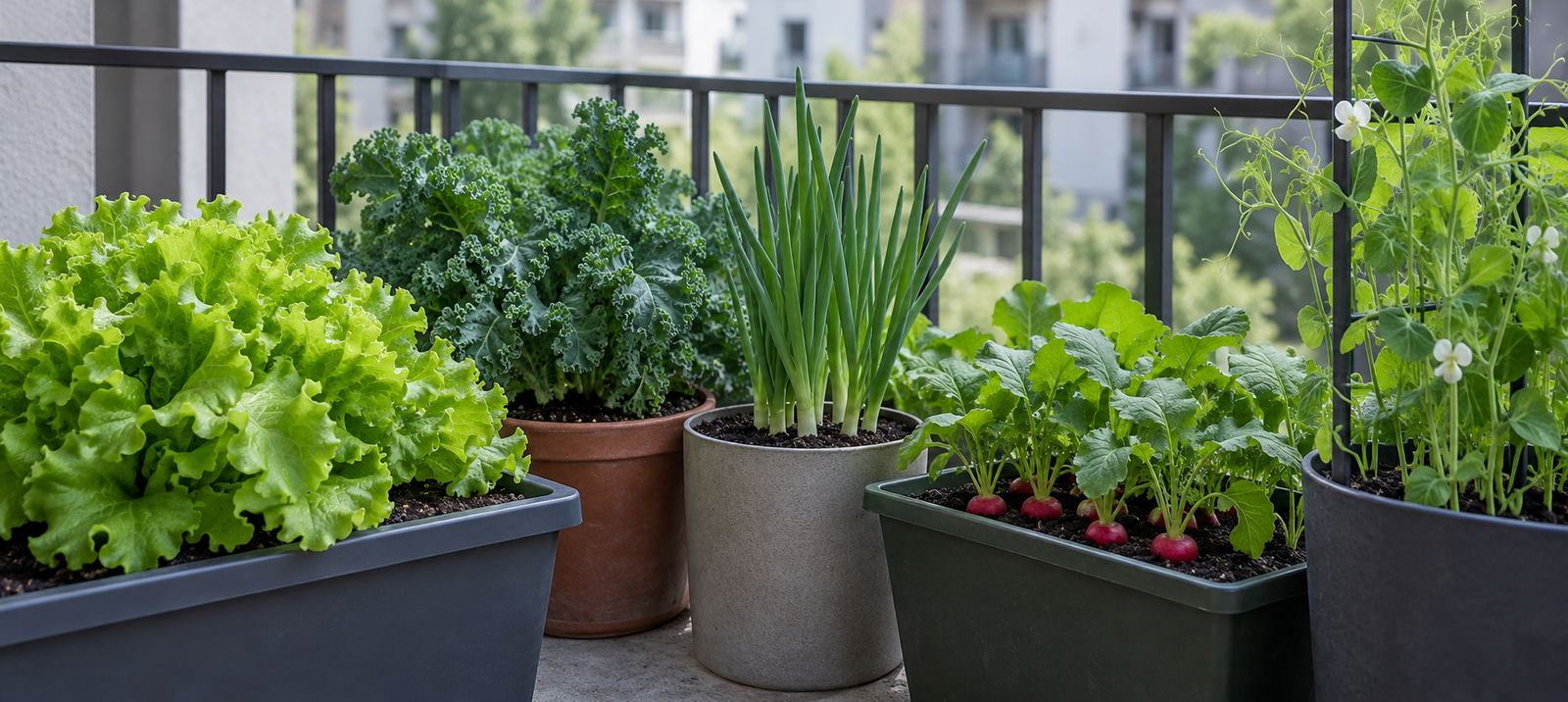
Use this list as a practical shortlist, not a promise. A balcony boxed in by tall buildings will grow differently from one with open sky and strong reflected light.
Leafy greens: the safest starting point
Leafy greens are the most forgiving option because you eat the foliage. The plant does not have to flower, pollinate, or fill heavy fruit; it only has to produce tender leaves. That makes greens a better fit for a low-light balcony garden than most fruiting vegetables.
- Lettuce: Grow loose-leaf lettuce in a shallow window box and harvest the outer leaves as needed. This method is called cut-and-come-again: you take some leaves while leaving the growing center intact.
- Spinach and arugula: These work well as baby greens, which are young leaves picked before the plant reaches full size. They also prefer cool weather, making them especially useful for spring and autumn balcony growing.
- Kale, Swiss chard, mustard greens, bok choy, and other Asian greens: Pick these leaf by leaf while they are small. In shade, expect slower growth and smaller harvests, not automatic failure.
For steadier moisture in small balcony planters, a setup like Self-Watering Containers for Balcony Vegetables: A Renter’s Setup can help keep leafy crops from shifting between too wet and too dry.
Roots, shoots, and quick crops
Root vegetables can work on a shaded balcony when they are quick, compact, or useful for their tops as well as their roots. Radishes are the most realistic starting point. Sow them in a deeper pot rather than a very shallow tray, because the swollen root needs space to form below the compost surface.
- Radishes: Treat these as a small, fast crop for cool conditions. If the roots stay thin, the peppery leaves are still edible when young and tender.
- Baby beets: These are more reliable for beet greens than for full-size roots in low light. Harvest the young leaves for salads or cooking.
- Scallions: These suit containers because the harvest is slim stems and green tops, not a large bulb.
- Pea shoots: Grow these in a tray if the balcony is too dim for pea pods. Shoots are the tender young stems and leaves, clipped before the plant needs to flower.
- Microgreens: These are seedlings harvested soon after they sprout. They are a useful fallback for very shaded balconies because they grow quickly in trays and do not need to mature into full plants.
Vegetables to Avoid—or Treat as Experiments—in Low Light
After you’ve chosen reliable crops such as greens, shoots, and small roots, be selective with the space that remains. Fruiting vegetables are the most likely to disappoint on a low-light balcony. Unlike leaf crops, they have to grow foliage, flower, set fruit, and ripen it, which takes more energy.
The evidence supplied for this article does not include a source for exact light-hour requirements, so no crop should be treated as guaranteed. The practical pattern is still useful: tomatoes may produce green stems and leaves on a shaded balcony but few or no tomatoes. Peppers may stay small, sparse, and slow.
- Avoid as main crops: full-size tomatoes, peppers, cucumbers, zucchini, and eggplant. In weak light, these fruiting vegetables often show leggy growth: long, stretched stems reaching for light, with poor flowering.
- Maybe experiment: try one compact tomato or small pepper in the brightest pot position. Do this only if the balcony gets some direct sun or strong reflected light from pale walls, paving, or nearby windows.
- Better use of space: reserve most containers for crops that give edible leaves, stems, shoots, or small roots before they need heavy flowering.
Better swaps for common sunny-garden favorites
Treat a shaded balcony like a small kitchen counter, not a backyard vegetable patch: every pot needs to earn its space. Instead of tomatoes, grow salad greens and leafy herbs for bowls and sandwiches. Instead of cucumbers, try pea shoots or tender greens for a crisp bite. Instead of large peppers, plant scallions and leafy herbs you can snip often.
A simple rule keeps the garden productive: fill most containers with crops that are edible before flowering, and limit fruiting vegetables to one trial pot in the brightest position.
How to Set Up Containers for Shade-Tolerant Vegetables
After choosing crops that can handle limited light, keep the setup practical. For shade-tolerant vegetables, use pots with drainage holes, fill them with fresh potting mix, and set them where your north-facing balcony receives the brightest safe light.
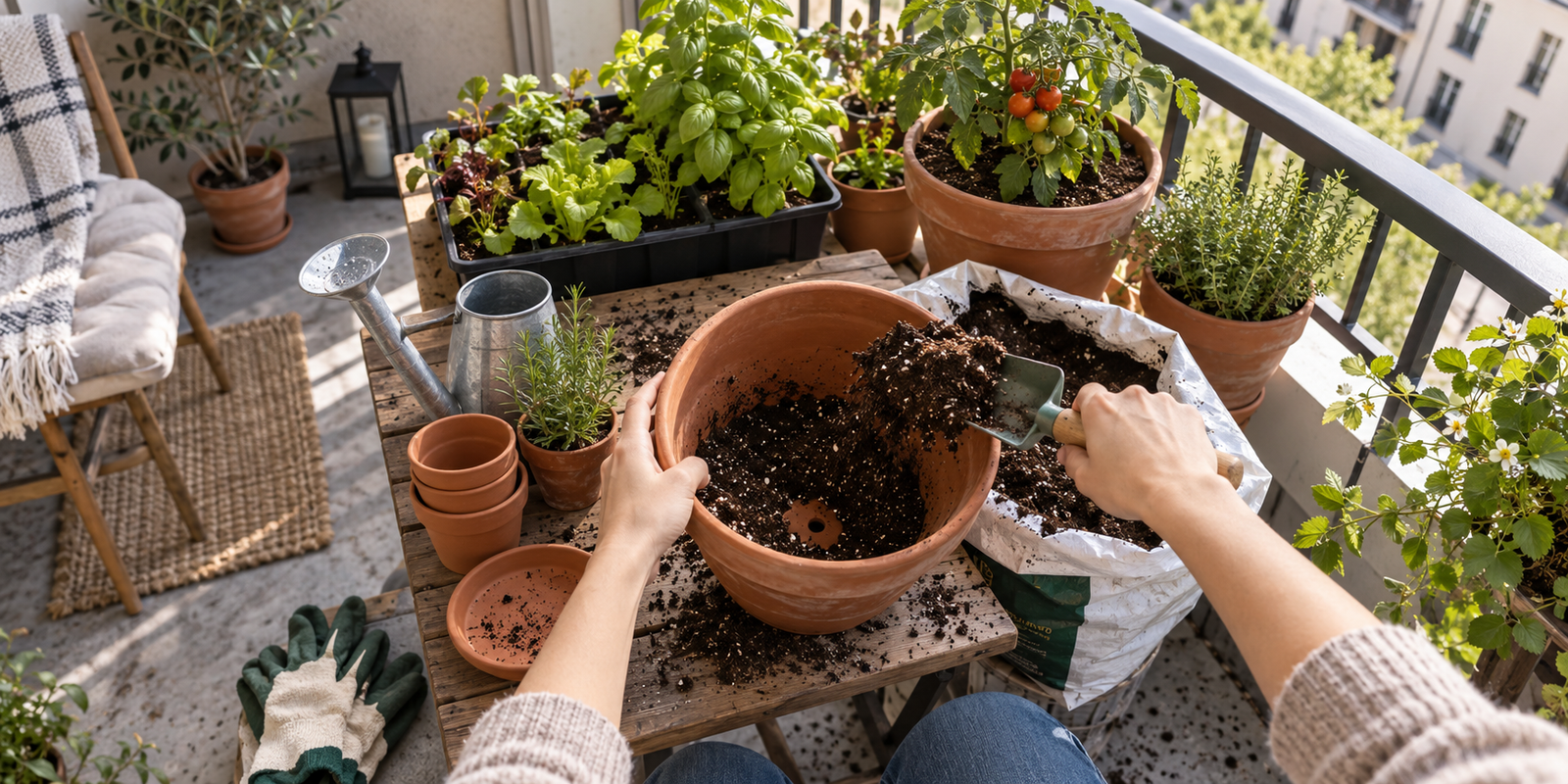
On a low-light balcony, each container functions as a small root zone. The right pot size and growing medium help plants make better use of available light while avoiding stale, waterlogged compost.
- Choose containers that drain. Water needs a way out of the pot, especially in shade, where soil dries more slowly. If a decorative outer pot has no drainage holes, use it as a cachepot and keep the growing pot inside it.
- Use potting mix, not garden soil. Potting mix is made to hold both air and moisture in containers. Heavy garden soil can compact in a pot, leaving roots with less oxygen.
- Put containers in the brightest safe spot. A pot near the open edge of a balcony often receives more sky light than one pushed against the wall. Keep heavy pots stable, and do not hang unsafe weight from a balcony railing.
- Water by feel, not by habit. A self-watering container can help keep moisture steadier on exposed balconies, but shaded pots may stay damp for longer. Check the mix before topping up.
Match the pot to the crop
Container size should match the part of the plant you plan to harvest. A shallow tray is enough for microgreens because you harvest them young, before they develop a large root system. A window box works well for baby lettuce, parsley, cilantro, and other compact herbs because it provides a wide planting area that is easy to snip from.
Use medium containers or a soft-sided grow bag for leafy greens that stay in place longer, such as spinach, mustard greens, bok choy, and mixed salad leaves. Choose deeper pots for radishes, Swiss chard, and kale because these crops need more root space and steadier moisture. If a guide gives exact depths, verify those numbers before treating them as rules.
- Shallow trays: microgreens, pea shoots, and very young salad leaves.
- Window boxes: lettuce, arugula, parsley, cilantro, and chives along a bright ledge.
- Medium pots or grow bags: spinach, bok choy, mustard greens, and cut-and-come-again mixes.
- Deeper pots: radishes, chard, kale, and longer-lasting leafy crops.
If you are choosing between container styles, prioritize stability, drainage, and access before appearance. Good-looking pots are useful only if roots can breathe, drain, and grow.
Care Tips That Matter More in Shade
Once your containers are in place, a shaded balcony needs calmer, more precise care than a sunny one. Water by checking the potting mix, not by habit. Track where the light is strongest, and give plants enough room for airflow. Shade reduces heat stress, but a low-light balcony garden can grow slowly, stay damp longer, and produce leggy seedlings, meaning young plants stretch toward light instead of staying compact.
- Put containers in the brightest legal, safe spot. A pot near the open edge of the balcony usually receives more sky light than one set against the apartment wall.
- Rotate leaning trays. If lettuce or bok choy bends toward the railing, turn the container so the other side faces the light. Treat it the way you would a houseplant leaning on a windowsill.
- Do not crowd plants. Tight spacing blocks airflow, the movement of fresh air around leaves. Enclosed balconies need extra attention because still air and damp potting mix linger longer.
- Use fertilizer lightly. Fertilizer means plant nutrients added to the potting mix. In shade, plants grow more slowly, so overfeeding can encourage soft, stretched growth instead of sturdy leaves.
Water less by habit, more by checking
In shade, watering should be based on touch rather than routine. Before adding water, press a fingertip into the potting mix. If the upper layer still feels moist, wait. If it feels dry and the container is noticeably lighter, water until excess can drain from the bottom.
Overwatering means keeping the root zone wet for too long, not simply giving a plant a large drink once. The fix is straightforward: use containers with open drainage holes, empty saucers after draining, and avoid watering just because it is “plant care day.”
Use repeat sowing for steadier harvests
Succession planting means sowing small batches in sequence instead of planting every seed at once. For a shaded balcony salad setup, that might mean one small tray of arugula now, another tray later, and a third after the first has been cut back.
This keeps one crowded container from becoming your entire crop. It also suits the slower rhythm of shade: while one tray is growing, another can be ready for harvesting leaves. For lettuce, chard, mustard greens, and kale, pick the larger outer leaves first and leave the small center leaves to keep growing.
A Simple Starter Plan for a Shaded Apartment Balcony
Once you are picking outer leaves regularly, keep the setup focused: one salad box, one herb pot, one microgreen tray, and one small pot for scallions or parsley. This compact starter garden gives a beginner balcony garden several ways to harvest from shade-tolerant crops instead of depending on vegetables that need sun to fruit.
A salad box is a long container for cut-and-come-again greens such as leaf lettuce and arugula. A microgreen tray is a shallow tray of seedlings harvested very young, before the plants need much root space.
If your balcony is very dim
For a recessed balcony, or one blocked by nearby buildings, start small. Treat the space like a kitchen with a single small burner: useful, but limited.
- Brightest edge: place one microgreen tray or pea shoot tray where the balcony gets the widest view of open sky.
- Protected corner: keep one herb pot with parsley, mint, or another leafy herb; see a balcony herb garden for beginners for herb-specific setup ideas.
- Small spare pot: grow scallions for snipping rather than full bulbs.
Plan on small, frequent cuttings rather than big bunches. In low light, these shade-tolerant vegetables and herbs perform best when harvested young.
If your balcony has bright open shade
Bright open shade means direct sun is blocked, but the balcony still has a wide view of the sky. With that level of light, the same small-space plan can support a few more crops.
- Put a railing-safe salad box at the brightest outside edge, if building rules allow, and sow leaf lettuce with arugula.
- Add one medium pot with Swiss chard or kale for larger leaves.
- Use a shallow tray for microgreens between main sowings.
- Add a small container of radishes, mainly for quick roots and edible tops.
For planning beyond a single low-light balcony garden, use this layout alongside an urban gardening guide before buying extra containers.
- Shopping checklist: drainage containers, fresh potting mix, labels, a watering can with a gentle rose, lettuce or arugula seed, microgreen seed, one leafy herb, and scallion, chard, kale, or radish seed.
Frequently Asked Questions
Can vegetables grow on a north-facing balcony?
Yes. A north-facing balcony can grow vegetables, but the best choices are crops harvested for leaves, shoots, or small young roots. Plan around compact, quick harvests such as salad greens, scallions, pea shoots, and herbs instead of vegetables that need strong sun to produce fruit.
What vegetables grow best in shade?
Leafy vegetables grow best in shade because they are harvested before they need to ripen fruit. Good options include lettuce, spinach, arugula, kale, Swiss chard, bok choy, mustard greens, and baby Asian greens. Small, fast crops can also work, including radishes picked young or beets grown mainly for their leaves.
Can tomatoes grow on a north-facing balcony?
Tomatoes are usually a poor main crop for a north-facing balcony. They need strong light to flower well and ripen fruit, so shaded plants often grow tall, leafy, and unproductive. If you want to try one, use a compact tomato and place it in the brightest possible pot.
How much sun do balcony vegetables need?
The answer depends on the vegetable and the harvest you expect. Leafy crops handle lower light better than fruiting crops, while tomatoes, peppers, cucumbers, and squash generally need much brighter conditions. On shaded balconies, aim for tender leaves and small harvests rather than full-size fruit production.
What can I grow on a balcony with no direct sunlight?
If your balcony gets no direct sunlight, choose very shade-tolerant vegetables and crops harvested young. Microgreens, pea shoots, scallions, parsley, lettuce, arugula, and baby greens are practical options in bright shade. On very dim balconies, shoots and microgreens may perform better than full container vegetables.
Conclusion
A north-facing balcony is best treated as a low-light vegetable garden, not a scaled-down sunny plot. Focus on leafy greens, herbs, shoots, microgreens, and a few compact root crops. Fruiting vegetables belong in the experimental category, and only if the space gets unusually strong reflected light.
Start small: place one or two containers in the brightest safe spot, grow a salad box or shoot tray, and watch how the plants respond. Compact, productive growth means the crop is coping well; stretched stems usually mean it needs more light. Expand from what the balcony can actually support, rather than from a sunny-garden wish list. Related: Cost to Start a Balcony Vegetable Garden 2026 Best Guide.
Leave a Reply