Introduction
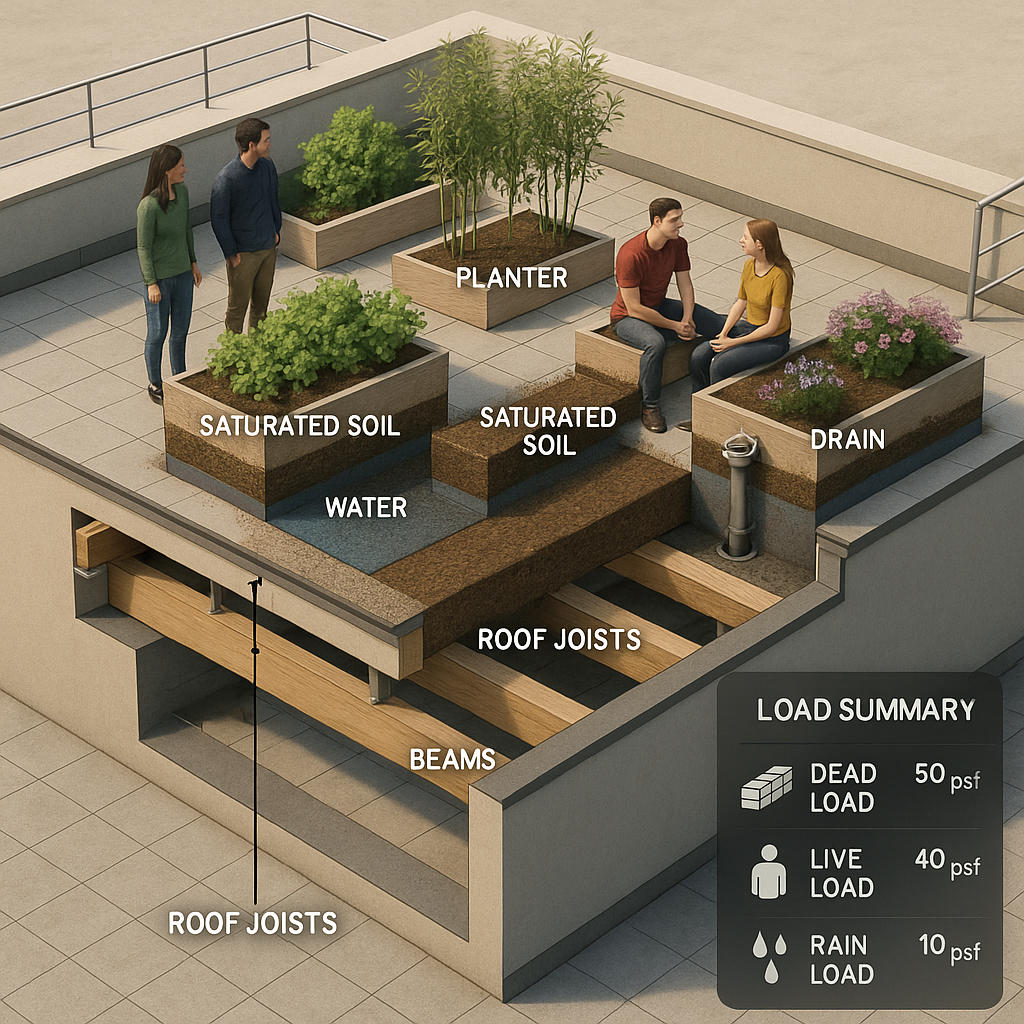
A rooftop garden weight load calculator gives you a preliminary estimate of the load a planted roof could place on its supporting structure. Here’s the thing: even a relatively small garden can become surprisingly heavy once you account for saturated soil, stored water, containers, plants, people, snow, and drainage problems. A 20-gallon planter holds roughly 167 pounds of water alone—before adding the soil, vegetation, or planter. Heavy features can also create concentrated point loads rather than distributing their weight evenly across the roof deck.
Use these calculations as screening tools, not as approval to load the roof. Existing drawings, the roof’s age, concealed damage, local snow conditions, and the drainage design may all change the result. A professional structural review is the sensible place to start.
This guide walks through the calculation method, explains pounds-per-square-foot (PSF) and kN/m² conversions, covers safety checks and layout planning, and points out common mistakes. It also looks at lower-weight design options and the professional verification required before installation.
Rooftop Garden Weight Load Calculator: What It Measures
Once those checks are on the table, a rooftop garden weight load calculator offers a practical way to estimate the proposed load. It adds up the garden components and spreads their weight across the area supporting them. The result is a screening estimate in pounds per square foot (psf)—not a structural approval or proof that the roof can safely carry the installation.
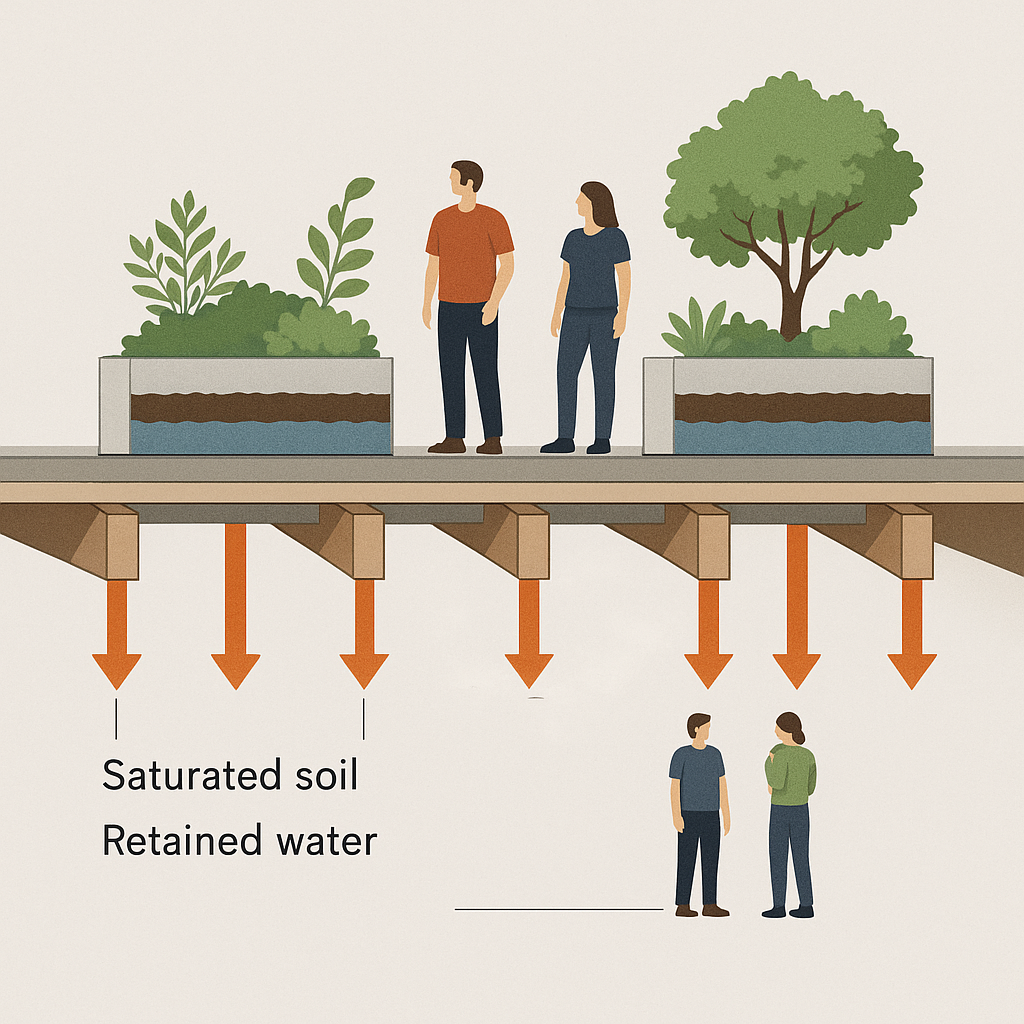
Definition: The calculation accounts for planters, growing media, retained water, plants, irrigation equipment, paving, people, and weather-related loads. It then compares the estimated rooftop garden load with the roof’s documented design requirements.
Two load categories make the estimate easier to organize. A dead load stays in place, including containers, soil, edging, and permanently installed irrigation. A live load changes over time—people, movable pots, maintenance equipment, and sometimes temporary water or snow all fall into this group.
| Measurement | What it tells you | Example |
|---|---|---|
| Total load | The combined weight of all listed components | 900 pounds |
| Average load | Total load divided by the supporting area | 900 ÷ 120 sq. ft. = 7.5 psf |
| Localized load | Weight concentrated at a planter base or support | 300 pounds on one small footprint |
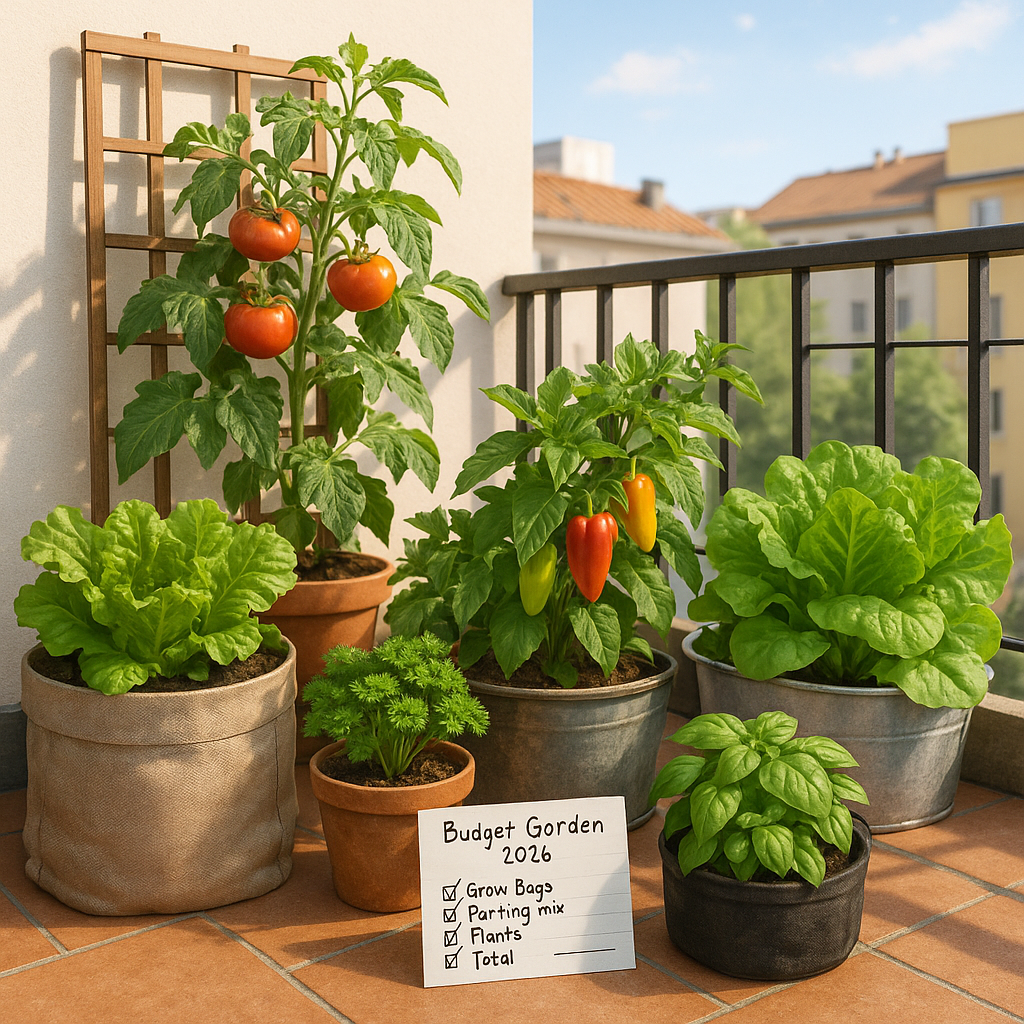
For crop choices and overall planning, see the broader Urban Gardening Guide: Grow Food & Green Spaces (2026). Then use the load estimate to decide whether that proposed arrangement belongs on the roof in the first place. The Balcony Herb Garden for Beginners: The Ultimate 2024 Guide is useful, too, if you want to compare lighter growing options.
Total Load, Average Load, and Point Load
Total load means the weight of every component added together. Average load takes that total and spreads it over a defined area. A point load, by contrast, passes through a small contact area, such as a planter foot, pedestal, or raised-bed corner.
Say three planters weigh 300 pounds apiece. Together, they create a 900-pound total. If the garden zone covers 24 square feet, the average load works out to 37.5 psf. That number describes the zone as a whole; it does not mean every point beneath it receives the same load.
Now consider the bases. If each planter sits on a two-square-foot footprint, each one applies roughly 150 psf before framing, blocking, or load-sharing supports are considered. The total 900 pounds might be reasonably distributed through beams and decking—or it might become a problem if it lands between supports. Same weight, very different pressure. That distinction is easy to miss.
Why Saturated Conditions Are the Starting Point
Use the wet or saturated weight of growing media, rather than the dry figure printed on a soil bag. Saturated media includes water held in its pores after substantial irrigation or rainfall, and that water may remain in a container until it drains. For deep beds, the difference can be surprisingly large.
Account for water in trays, reservoirs, drainage layers, and blocked outlets as well. A failed drain can briefly turn part of a rooftop garden into a shallow tank. Heavy rain adds another temporary load, and snow may create a separate load across exposed surfaces.
The U.S. Environmental Protection Agency’s green-roof guidance lists saturated growing media and retained water among the conditions that need attention. Start with that wetter case, then add people and maintenance equipment instead of assuming perfect drainage.
Finally, use a rooftop garden weight load calculator to compare the estimate with the roof’s actual design documents and verified roof load capacity. A generic capacity number cannot reflect the roof’s spans, joist direction, existing equipment, deterioration, or connection details. Those conditions require review by a qualified structural engineer.
How to Calculate Rooftop Garden Load Per Square Foot
Here’s the thing: a rooftop garden does not place the same demand on every roof. Span, joist direction, existing equipment, deterioration, and the condition of the connections all affect how much weight the structure can carry. To calculate the rooftop garden load per square foot, use the actual roof conditions, add each garden component at its heaviest expected condition, and divide the total by the area carrying that weight. Report both the planter’s local load and any defensible distributed load. Those two figures can be very different.
The Formula and Required Inputs for a rooftop garden weight load calculator
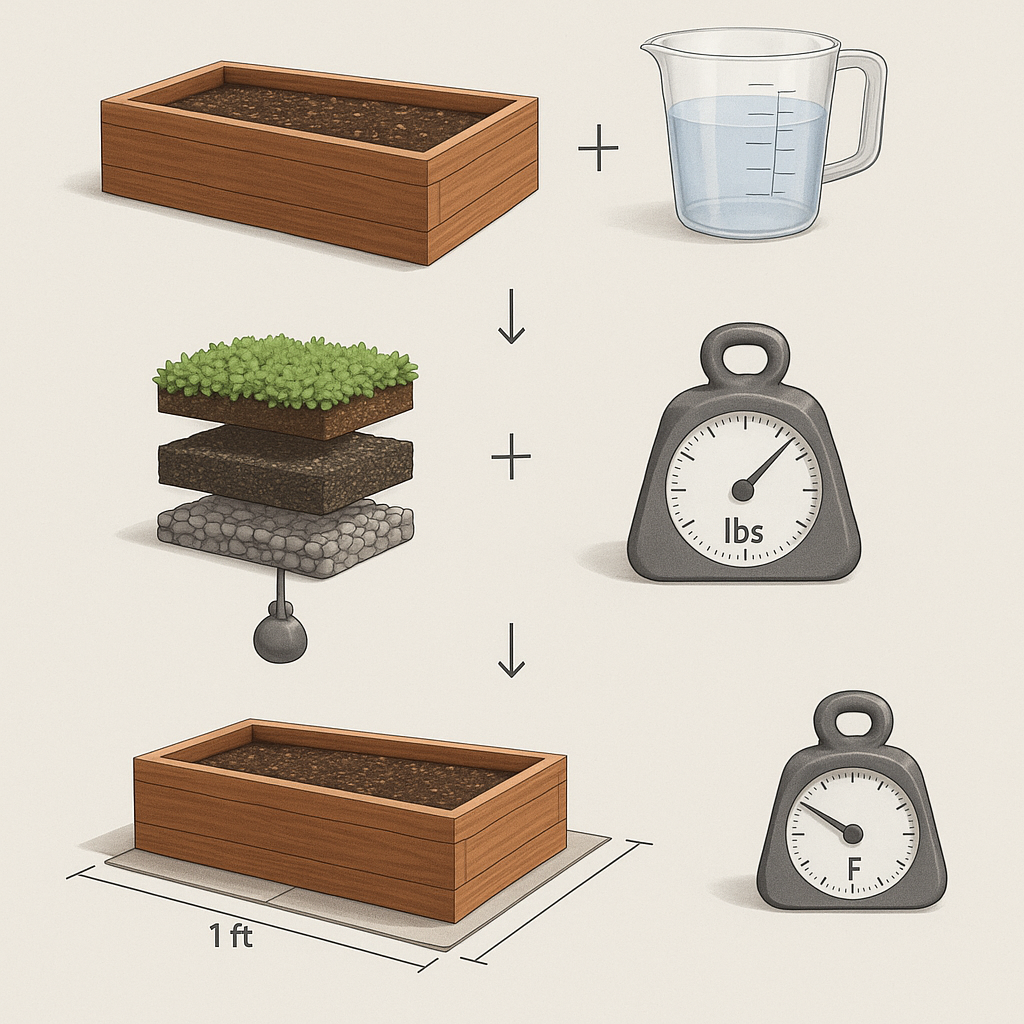
Start with this formula:
Total rooftop garden load = container weight + saturated growing-media weight + retained water + plants + mulch + irrigation and accessories + people or temporary loads.
Next, calculate weight per square foot = total load ÷ footprint or tributary area. A tributary area is the portion of the roof assumed to transfer a particular load to supporting beams, walls, or columns. Put simply, it is the area that “feeds” weight to a specific structural support.
- Measure the planter’s length, width, and media depth.
- Find the saturated soil weight—the weight of fully wet growing material, rather than dry soil. The USDA Natural Resources Conservation Service explains soil bulk density; use the supplier’s saturated value whenever one is available.
- Weigh or verify the empty container, retained water, plants, mulch, furniture, irrigation equipment, and people.
- Measure the actual footprint, then identify the larger area that might legitimately distribute the load.
Worked Example: One Planter and Its Occupied Area
Assumptions: one planter measures 2 feet by 4 feet and contains 18 inches (1.5 feet) of growing media with a saturated density of 120 pounds per cubic foot. The container weighs 80 pounds. Add a 40-pound water reserve, 60 pounds of plants, 35 pounds of mulch, 25 pounds of irrigation and accessories, and one 180-pound person. This is a load estimate—not structural approval.
| Component | Calculation | Weight |
|---|---|---|
| Growing media | 2 × 4 × 1.5 = 12 ft³; 12 × 120 | 1,440 lb |
| Other components | 80 + 40 + 60 + 35 + 25 + 180 | 420 lb |
| Total | 1,440 + 420 | 1,860 lb |
- Local planter load: the 8-square-foot footprint produces 1,860 ÷ 8 = 232.5 pounds per square foot. That is the planter’s local load in pounds per square foot.
- Illustrative distributed load: if verified support conditions allow the load to spread across 24 square feet, 1,860 ÷ 24 = 77.5 pounds per square foot.
Does the smaller number mean the roof is automatically safe? No. A roof may transfer force through concentrated bearing points, joists, beams, or decking instead of spreading it evenly across the visible area. This two-number check helps uncover a risk that is easy to miss: a reasonable average can hide a severe local load. Concentration matters.
A structural professional must verify how the roof actually distributes the load.
What Adds Weight to a Rooftop Garden?
Here’s the thing: a rooftop garden load includes every installed or temporary item—saturated growing media, containers, drainage materials, plants, furniture, equipment, water, and people. The empty planter label is just the starting point. Once filled and watered, the installed planter may weigh several times more. Localized loads matter, too, especially when heavy items sit in one small area.
Soil, Water, and Drainage Layers
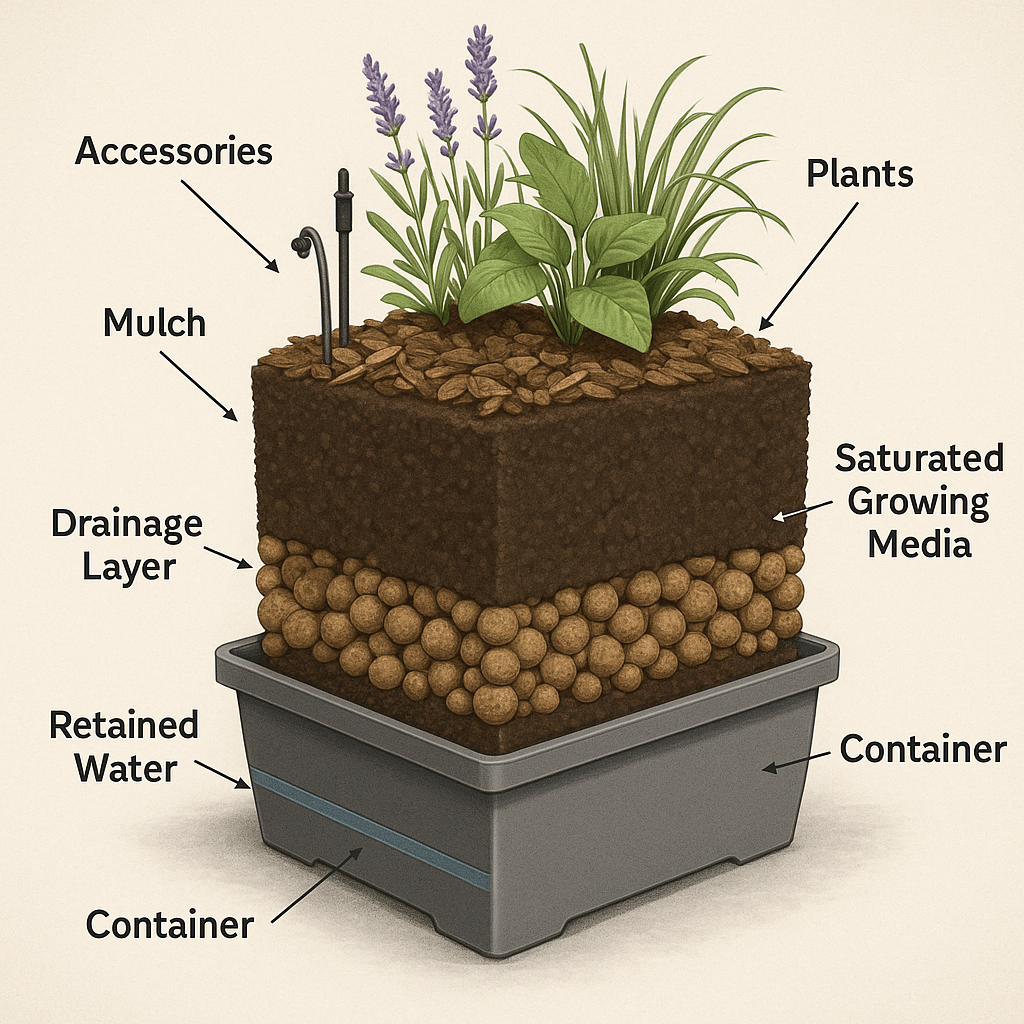
Saturated soil weight is usually the largest part of the calculation. Dry potting soil contains air-filled pores, but irrigation and rain replace some of that air with water. Use the supplier’s saturated density—the weight per cubic foot—rather than the dry weight printed on the bag.
To see how quickly the numbers change, assume ordinary wet soil has a saturated density of 110 lb/ft³ and engineered lightweight media has a density of 70 lb/ft³. Per square foot of bed area, the media alone would weigh approximately:
| Media depth | Ordinary soil | Lightweight media |
|---|---|---|
| 8 inches | 73 lb/ft² | 47 lb/ft² |
| 12 inches | 92 lb/ft² | 70 lb/ft² |
| 18 inches | 165 lb/ft² | 105 lb/ft² |
These figures are hypothetical planning values, so obtain the actual product density before relying on them. Drainage mats, filter fabric, gravel, and trays need to be added separately. And water trapped above a blocked drain is retained water—not a small detail that can be ignored. For reference, the U.S. Geological Survey states that water weighs about 8.34 lb per U.S. gallon.
Plants, Containers, People, and Accessories
Plant mass increases as stems, roots, and foliage mature. Wet mulch, trellises, benches, storage boxes, hand tools, and visitors all add variable live loads. Irrigation tanks are particularly concentrated: a 100-gallon tank contains roughly 834 pounds of water before the tank itself is counted.
For raised beds and roof garden containers, measure unusual items instead of estimating by appearance. Weigh a filled container, or calculate its volume and apply the manufacturer’s media density. Include the container weight, saucer, retained water, plant, and any support frame. A container may look modest but still create a substantial point load.
| Sample inventory | Illustrative total |
|---|---|
| 4 × 8-ft raised bed: lightweight saturated media, bed, drainage, plants, mulch | About 2,170 lb |
| Six roof garden containers: 20-gallon media, pots, plants, and retained water | About 1,320 lb |
Before relying on an estimate, work through this short checklist. A rooftop garden weight load calculator can organize the figures, but a structural professional must verify how the roof distributes the load.
- Record each container’s empty weight and filled volume.
- Request saturated media density from the supplier.
- Add drainage layers, gravel, tanks, furniture, tools, and people.
- Recheck the inventory after heavy rain, irrigation, or plant growth.
Rooftop Garden Weight Conversion: PSF to kN/m²
Once you have listed every rooftop component, convert the combined load with care. The standard conversion is straightforward: multiply pounds per square foot (psf) by 0.04788 to get kilonewtons per square meter. In other words, 1 psf = 0.04788 kN/m², and 1 kN/m² = 20.885 psf.
Here’s the thing: a rooftop garden weight load calculator may show weight per square foot in U.S. customary units, while an engineer’s drawings may use kilonewtons per square meter. A kilonewton (kN) measures force, whereas kN/m² describes force distributed over an area. The two measurements are related, but they are not interchangeable.
Conversion Table and Example
| Garden load (psf) | Equivalent load (kN/m²) |
|---|---|
| 50 | 2.394 |
| 75 | 3.591 |
| 100 | 4.788 |
| 150 | 7.182 |
| 200 | 9.576 |
Take a 100-psf garden load as an example: 100 × 0.04788 = 4.788 kN/m². For most working calculations, that becomes 4.79 kN/m². Still, avoid rounding too early. Small changes can matter once several load categories are added and an engineer checks the result.
For a practical planter estimate, assume saturated soil weighs 110 lb/ft³. An 8-inch soil depth is 0.667 feet, giving 110 × 0.667 = 73.4 psf, or about 3.52 kN/m². At a 12-inch depth, the soil alone weighs 110 psf, equivalent to 5.27 kN/m².
At 18 inches, that same saturated soil reaches 165 psf, or 7.90 kN/m². Remember what that number covers: saturated soil only. It does not include containers, plants, people, irrigation equipment, or any other rooftop components. Clear labels make these distinctions much easier to track.
Soil density changes with its composition and moisture content. The USDA NRCS Soil Survey Manual explains how bulk density depends on soil type and condition. Local plans may use either unit system, so label each worksheet clearly. Calculate every component separately with the rooftop garden weight load calculator, then perform the conversion.
Safety: Can Your Roof Support a Garden?
Once every component is calculated and labeled, a rooftop garden weight load calculator can help screen the proposal. It cannot approve the roof, though. Safe approval depends on documented roof load capacity, a site inspection, and, in many cases, a licensed structural engineer who understands the local building code. The practical question is simple: can my roof support raised garden beds?
Here’s the decision path. If the records are complete and the proposed loads sit clearly below the documented limits, ask for a professional review of the layout. If records are missing, the loads are substantial, or visible damage is present, pause the garden plans and get engineering advice first.
- Retrieve structural plans, permits, occupancy records, roof manufacturer information, and alteration history from the owner, building department, or facilities office.
- Identify the roof structure’s design dead load and live load, along with applicable snow, wind, seismic, and maintenance-access requirements.
- Inspect framing, membranes, drains, parapets, supports, and connections for deflection, corrosion, cracking, leaks, or other signs of distress.
- Compare the garden’s proposed locations and loads with the verified limits—not with a generic figure found online. Use the rooftop garden weight load calculator for screening, not as a replacement for that comparison.
ASCE’s ASCE 7 load standard addresses environmental and occupancy loads. The authority having jurisdiction, however, decides which edition and provisions apply in a particular location.
Dead Load Versus Live Load
Dead load is weight that stays in place: planter boxes, raised-bed frames, growing media, trellises, irrigation lines, paving, and permanent screens. Picture a backpack permanently attached to the roof. It uses part of the structure’s allowance continuously.
Live load changes with conditions and use. In a rooftop garden, it may include people, maintenance carts, stored hoses, temporary equipment, snow, and water held after a storm. A roof might handle a quiet garden one day, then face a very different demand when several people are maintaining it while snow and saturated materials remain in place.
Both categories need to be checked together. A roof’s design live load is not automatically unused capacity for a garden; the original design may already account for access, snow, partitions, or other activities. The controlling load combination may last only briefly, but that does not make it structurally harmless.
When to Consult a Structural Engineer
Bring in a licensed structural engineer before installation if the project includes concentrated planters, raised beds, large trees, masonry containers, water features, changes to roof access, or unusually deep growing areas. Professional review also makes sense for older buildings, unclear plans, undocumented renovations, visible damage, or proposed loads that approach or exceed the documented limits.
A point load is force concentrated over a small contact area—much like balancing on one heel instead of standing on both feet. It can overstress a joist, beam, deck panel, or connection even when the garden’s average load seems fairly low. Spreading containers across several framing lines may reduce a point load, but it does not automatically turn an unsafe roof into a safe one.
Request engineering review right away if the roof deflects, cracks, leaks, shows rusted framing, or has damaged waterproofing. Stop work if any of these conditions appear, or if standing water remains after drainage should have cleared. Do not add soil, paving, or large containers while the cause is still unknown.
Drainage, Ponding, and Waterproofing Risks
Containers can block roof drains, scuppers, gutters, or emergency overflows. Leaves and roots can do the same. The result may be ponding water—water that remains on the roof instead of draining away. As it accumulates, it adds weight and can increase deflection, creating a low spot that holds even more water. A troublesome cycle.
Keep drainage paths visible and accessible. Arrange containers so maintenance staff can reach drains, overflow routes, parapets, and inspection points. Protective pads or separation layers should be used only when they are approved for the particular roofing system; an incompatible material can trap moisture, soften a membrane, or void its warranty.
Schedule inspections after severe weather and periodically throughout the growing season. Look for leaks, membrane abrasion, blocked outlets, shifted containers, and new standing water. Never cut, fasten, penetrate, or otherwise modify a roof membrane to install irrigation or supports without guidance from the roofing manufacturer and a qualified professional.
Roof Layout Method: Reduce Point Loads Safely
Once the roof has been checked for damage and drainage problems, map its structure before bringing containers up. A concentrated point load can be reduced by distributing containers across areas a qualified professional has identified as suitable. A rooftop garden weight load calculator is useful for early estimates, but a lower average load does not make an unsafe area acceptable, nor does it increase the roof’s load capacity.
Map the Roof Before Placing Containers
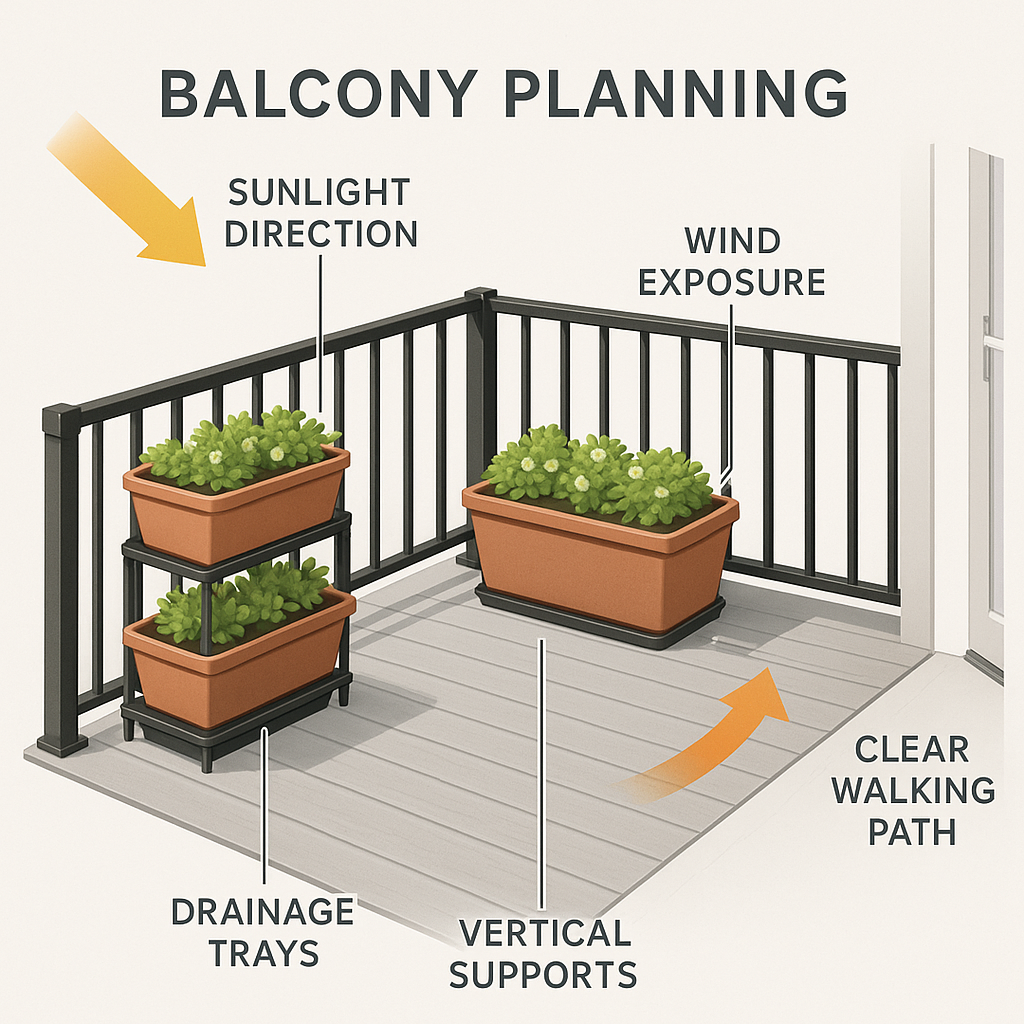
Begin with a scaled roof sketch or a clearly marked aerial image. Show the locations of beams, joists, columns, walls, roof edges, parapets, access hatches, skylights, mechanical equipment, drains, and scuppers. Here’s the basic distinction: a joist is a repeated framing member, while a beam generally supports several joists and transfers their weight to columns or walls.
- Obtain structural drawings if they are available, then identify unsupported spans between bearing points.
- Mark access routes, ladder landings, service equipment, and the clear paths required for inspections or repairs.
- Photograph the roof from several angles. Include every drain, scupper, crack, ponding area, flashing detail, and visible support line.
Put a measuring tape, the date, compass direction, and a scale object in the photographs. That extra context gives an engineer evidence of the roof’s existing condition—not just a diagram showing where containers might go. The U.S. Environmental Protection Agency’s green-roof guidance likewise treats access, drainage, and maintenance as design considerations rather than items to deal with later.
Distribute Weight Without Blocking Drainage
Consider the difference between one 400-pound planter and four planters weighing 100 pounds each. If the four containers are spread across a verified supporting area, they may reduce the intensity of each individual point load. The total is still 400 pounds, though. Spacing does not increase roof capacity or fix a weak framing bay.
Broad load-distribution surfaces can help, but only when a structural professional approves their location, dimensions, and compatibility with the roof assembly. A rooftop garden weight load calculator can assist with preliminary planning; it cannot confirm that a board, platform, or tray spreads force safely. Keep containers away from roof edges, parapets, cantilevers, openings, and areas between supports unless the roof review specifically allows them.
- Keep clear: drains, scuppers, overflow routes, inspection paths, access hatches, and equipment service zones.
- Do not place: concentrated planters over skylights, unsupported spans, membrane damage, or concealed drainage channels.
- Record: each container’s position, filled weight, footprint, and distance from the nearest beam, joist, or bearing wall.
Think of the layout as passengers distributed across a bridge: where each person stands affects how the forces travel to the supports. That comparison is useful, but it has limits. Layout optimization is a screening step, not structural design, and it cannot replace professional confirmation.
Common Rooftop Garden Load Mistakes and Misconceptions
Here’s the thing: location changes how forces travel to the supports, so rooftop garden load mistakes usually come down to two problems—using incomplete weights or spreading a concentrated load across more area than it really covers. A rooftop garden weight load calculator is useful for an initial screen, but it cannot confirm the actual roof load capacity or take the place of a structural review.
| Myth | Reality |
|---|---|
| Dry soil weight is sufficient. | Use saturated media, retained water, and the manufacturer’s density data. |
| Only the planter counts. | Include the container, drainage layer, plants, mulch, water tanks, and accessories. |
| Divide by the entire roof area. | Use the actual loaded area and examine the structural tributary area. |
| Lightweight media is automatically safe. | Its density, water retention, depth, and roof location still require verification. |
| A drain beneath a planter is harmless. | Blocked drainage can create ponding water and add both weight and waterproofing risk. |
Why Dry-Bag Estimates Fail
A bag marked “40 pounds” generally refers to dry soil or dry growing media. That is not the weight you should use after irrigation. For example, if a 40-pound bag absorbs 12 gallons of water, it gains about 100 pounds. Since water weighs approximately 8.34 pounds per gallon, the saturated media weighs roughly 140 pounds before the container or plant is added.
That difference is large enough to change the calculation. Five bags may look like a 200-pound load when dry, but after thorough wetting they can weigh roughly 700 pounds. Rainfall and retained water may push the load higher still. A rooftop garden weight load calculator should therefore use a verified saturated soil weight, not a dry-bag figure.
Density also varies from one product to another, especially with compost, engineered media, mineral aggregates, and blended materials. Use the manufacturer’s saturated bulk density when it is available. The USDA Natural Resources Conservation Service Soil Survey Manual explains how bulk density changes with soil composition, porosity, and moisture. “Lightweight” is a product specification—not a structural safety approval.
Why an Average PSF Result Can Hide Danger
An average pounds-per-square-foot figure only describes the area chosen for the calculation. A structural tributary area, by contrast, is the part of the roof whose load is actually carried by a particular joist, beam, column, or wall. Those two areas are not necessarily the same.
Consider a 600-pound planter averaged over 120 square feet. The result is just 5 psf. But if its four feet each touch only 4 square inches, every foot applies 150 pounds to a very small bearing area. That is a concentrated point load—much like setting a heavy suitcase on one floor tile instead of distributing it across the room.
There is another easy-to-miss issue: occupants, maintenance equipment, and snow may be left out of the live load. A roof can have a seemingly modest garden average while one joist carries a far greater demand. Do not place planters over drains, openings, or unsupported spans, and do not assume drainage layers weigh nothing. Confirm the load path, roof framing, drainage, and waterproofing with a qualified structural professional.
Expert Tips for a Safer, Lower-Weight Roof Garden
Once the load path, drainage, and waterproofing have been checked, start with small, measurable loads. Compact roof garden containers, certified lightweight growing media, and a cautious worksheet are a sensible first step—before plants, seating, or decorative features arrive on the roof.
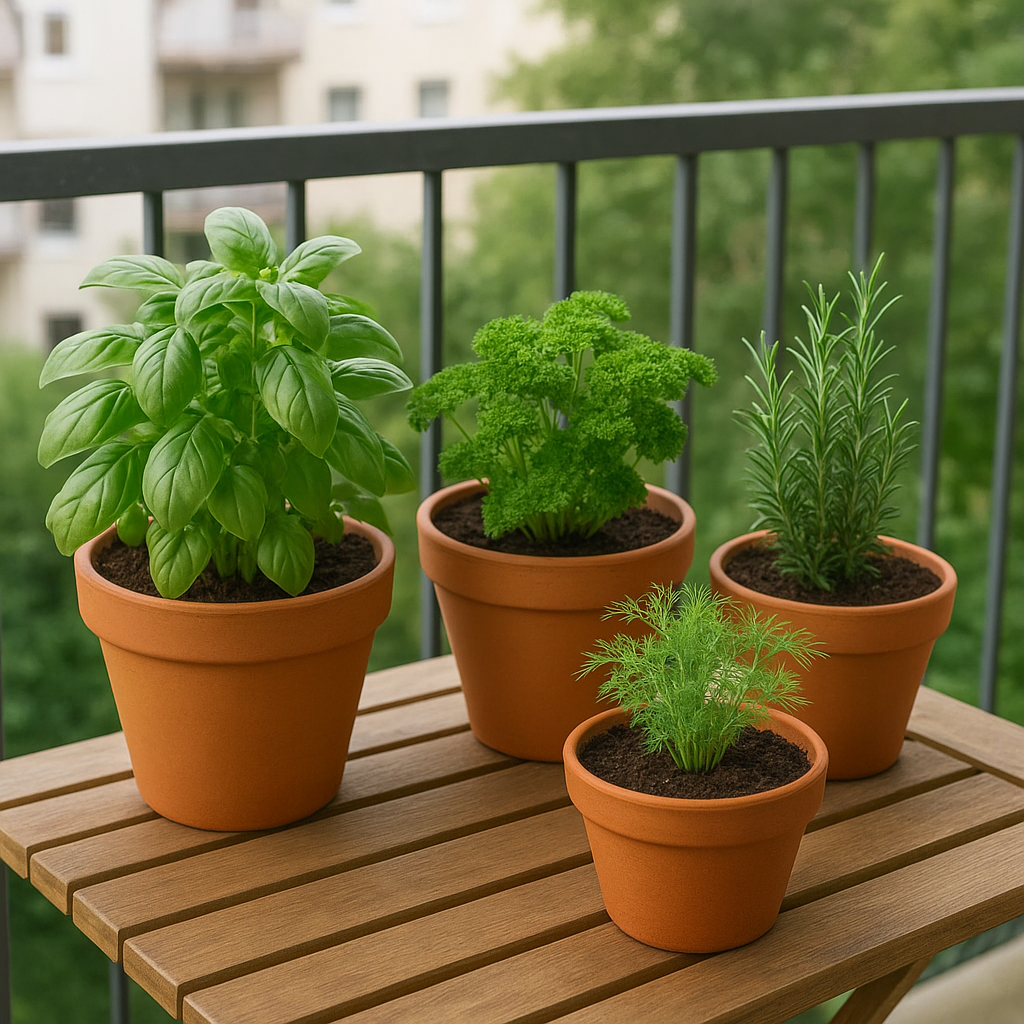
Herbs in small containers are a good low-risk starting point. Add larger groupings only after you have reviewed how the weight is distributed. Raised beds, water features, and spaces designed for gatherings should wait until a structural engineer has reviewed the proposal. Here’s the thing: a roof may carry a surprisingly heavy load in one area and still be vulnerable to concentrated weight in another.
Build a Conservative Scenario Worksheet
A downloadable worksheet helps keep assumptions visible instead of hiding them inside a rooftop garden weight load calculator. Use a rooftop garden weight load calculator as a cross-check, not as a replacement for professional review. Create separate input cells for each container, saturated potting soil, the container itself, plants, people, retained water, snow, and accessories. Record dimensions, manufacturer information, and the area over which each load will be placed.
Run five scenarios: a dry installation, fully saturated media, blocked drainage, design snow, and occupied use. For each one, calculate the total weight in pounds, the pressure in pounds per square foot (psf), and the equivalent load in kilonewtons per square metre (kN/m²). Include a clearly marked uncertainty allowance for unknown media density, retained water, snow, or occupancy. If key information is missing, a temporary 15% screening allowance may be used for initial review.
That allowance is not a structural code factor, and it is certainly not permission to build. A structural engineer should choose the appropriate margin and verify the load paths, waterproofing, and roof capacity. Measure first. A rough guess can become an expensive repair.
A Pre-Installation and Maintenance Checklist
Before installation:
- Confirm the available roof records and obtain written structural advice before adding heavy planters, tanks, or raised beds.
- Measure containers and weigh filled units where practical. Empty product labels tell only part of the story.
- Select media with a documented saturated density, compatible protective layers, and adequate drainage.
- Mark drains, scuppers, inspection routes, seams, penetrations, and access points, and keep each one visible.
- Start with a small-container plan. For beginner-scale growing ideas, see Balcony Herb Garden for Beginners.
After heavy rain or snow: inspect the roof for standing water, blocked outlets, leaks, membrane damage, new cracks, unusual deflection, or containers that have shifted. If the roof sags or water remains where it normally drains, stop access and get professional advice.
During seasonal maintenance: clear leaves, check drainage routes, inspect protective pads, and compare container locations with the approved layout. Record every change, including additions or removals such as trellises and furniture, then recalculate the load before expanding. Broader layout ideas belong in a separate urban-gardening design guide, not in unverified roof-loading plans.
Frequently Asked Questions
Before anything is installed, use a rooftop garden weight load calculator to screen the proposed load. The result is only an estimate, not structural approval. Use measured weights whenever possible, then ask a qualified professional to inspect and verify the roof before installation.
How do I calculate the weight of a rooftop garden?
Add together the saturated growing media, containers, plants, stored water, furniture, and the expected occupants. Then divide the total weight in pounds by the area supporting the garden. That gives you the average load in pounds per square foot.
How much weight can a typical roof support per square foot?
There is no single safe number for every roof. For example, a roof designed for a 20-psf live load may not be able to carry saturated planters, snow, and maintenance traffic at the same time. The roof’s design, age, framing, and existing loads all matter.
How much does wet soil weigh in a rooftop planter?
Wet soil commonly weighs around 90–120 pounds per cubic foot, depending on its composition and moisture level. A cubic foot weighing 110 pounds, for instance, adds 110 pounds to the planter load.
How do I calculate planter load in pounds per square foot?
Divide the planter’s fully loaded weight by the area of its base that carries the load. A 300-pound planter resting on a 3-square-foot base produces 100 psf before nearby planters, people, or other loads are included.
What is the difference between dead load and live load on a roof?
Dead load means weight that stays in place, such as roofing materials, containers, and fixed planters. Live load changes over time. People, movable furniture, stored water, and temporary snow are common examples.
Can my roof support raised garden beds or large planters?
Possibly—but only a site-specific structural review can confirm it. Raised beds and large planters may concentrate hundreds of pounds over relatively small bearing areas, and rainfall can increase the load quickly. That is the part many preliminary estimates miss.
How do I convert rooftop garden loads from psf to kN/m²?
Multiply the load in psf by 0.04788. So, 50 psf equals 2.394 kN/m². To convert in the other direction, multiply kN/m² by 20.885.
How much does a 25-gallon planter weigh when full of saturated soil?
Plan on roughly 300–450 pounds, including the container, although the final weight depends on the growing media’s density and drainage. The soil volume alone is about 3.34 cubic feet.
Conclusion
That 25-gallon example makes the point clearly: a reliable rooftop garden weight load calculator needs to include saturated soil, retained water, containers, plants, accessories, people, snow, and even blocked-drainage conditions—not just the dry materials. Its real value is showing the heavier, more realistic load scenarios before anything is installed.
Average pounds per square foot can hide a dangerous point load beneath a planter foot. Map the joists, beams, supports, drains, openings, edges, and access paths first. A planter sitting over a joist line may transfer its force very differently from one placed at midspan. That’s an easy detail to miss.
The calculator is still a screening tool, not a structural approval. Confirm the building’s design capacity using structural plans, available records, an inspection, or a licensed structural engineer. Document each assumption and scenario, then get professional approval before installation.