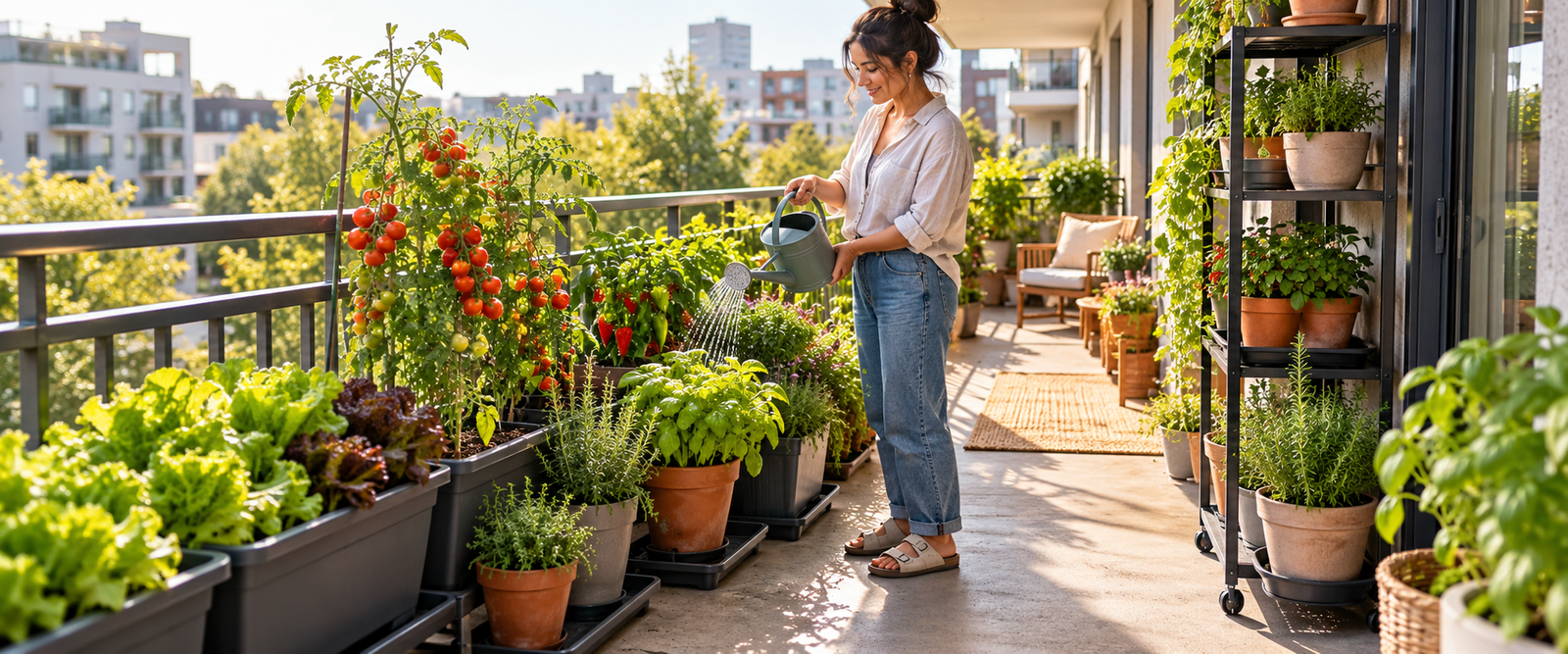
Balcony vegetable gardening lets apartment renters grow food in containers, even with limited space—a narrow railing, a sunny corner, or a balcony shared with others. This guide explains how to choose crops and containers, assess light, manage watering and drainage, follow safety and renter requirements, and care for plants from setup through harvest. Related: Best Herbs for a Sunny Balcony in 2026: Top Picks for Renters.
Load limits, lease restrictions, and growing conditions vary by building and climate. Check them before bringing in heavy planters or water-filled tubs. Start small with a tomato in a deep pot, herbs in a window box, or lettuce in a shallow container; each option teaches the basics without overwhelming your space.
Start With Your Balcony’s Real Limits Before Buying Plants
The safest first step in vegetable gardening on an apartment balcony is to plan around what your balcony, lease, and daily routine can support. The best apartment balcony garden is not the biggest one; it is the one you can water, move, drain, and maintain within building rules.
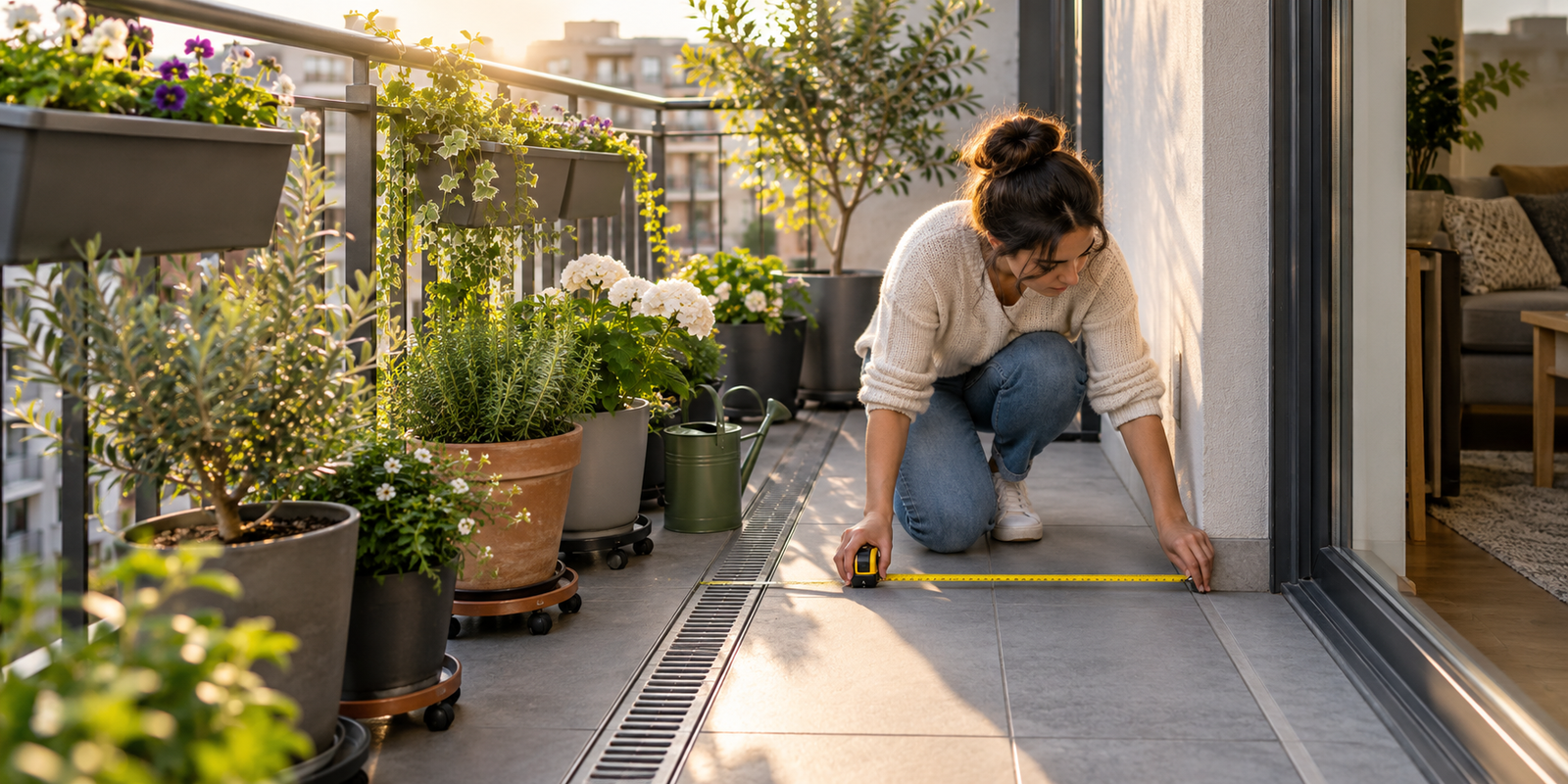
Think of the balcony as a tiny kitchen counter: every pot needs a secure spot, enough working space, and a plan for handling spills. Before buying seedlings, check four limits: usable floor space, sunlight, wind exposure, and building rules.
Measure Space, Access, and Weight Risk
Measure the floor area you can actually use rather than the entire balcony. Leave room for the door to open and a clear walking path. You also need a place where excess water can drain without running onto a neighbor’s balcony or into a public area. Related: Cost to Start a Balcony Vegetable Garden 2026 Best Guide.
Pay close attention to balcony weight limits. Wet potting soil, ceramic pots, and large planter boxes can weigh far more than they appear to, especially after watering or rain. Do not assume the exact weight limit; check your lease, ask building management, or consult a qualified professional before using large containers.
For a trial layout in limited balcony space, start with a few lightweight grow bags or plastic pots. They are easier to move than heavy ceramic containers and allow you to test sun, wind, and watering conditions before expanding.
Check Renter Rules Before You Use Railings or Walls
Renter rules often shape the garden more than the plant list does. Read your lease and building guidance for restrictions on drilling, attaching items to railings, hanging planters over public areas, blocking fire escape access, or changing the building’s visible exterior.
Start with reversible setups: freestanding shelves, movable pots, stacked planter systems, and grow bags. These balcony garden ideas for beginners require no permanent hardware and are easier to remove at move-out.
- If the balcony is windy, choose low, stable containers rather than tall shelving that could act like a sail.
- If rules ban railing planters, use floor-standing containers positioned fully inside the balcony edge.
- If you are unsure about load capacity, avoid large planter boxes until building management or a qualified professional confirms what is safe.
- If daily access is tight, keep the layout simple enough to water and harvest without stepping over pots.
Match Vegetables to Sun, Shade, and Balcony Direction
With safe, easy-to-reach containers in place, successful balcony vegetable gardening starts with choosing crops for the light your balcony actually receives, not its compass direction alone. When growing vegetables on the balcony, remember that fruiting vegetables, including tomatoes, beans, and peppers, need the brightest position; leafy greens and some herbs are more forgiving.
Watch the balcony at different times over several days. Neighboring buildings, overhangs, railings, and seasonal changes can turn a supposedly sunny balcony into a partly shaded one.
| Balcony condition | Good starting choices | What to watch |
|---|---|---|
| South- or west-facing, bright and warm | Cherry tomatoes, hot peppers, green chillies, bush beans, and dwarf varieties | Containers can dry quickly; plants may need regular watering and support |
| East-facing, with gentler morning light | Compact tomatoes, peppers in a warm position, leafy greens, and herbs | Check whether nearby buildings block the morning sun |
| North-facing or substantially shaded | Leafy greens, scallions, herbs, and other shade-tolerant vegetables | Tomato and pepper harvests may be limited by insufficient direct light |
Best Crops for Bright Balconies
Use the brightest spot for cherry tomatoes, hot peppers, green chillies, bush beans, and compact or dwarf varieties. These crops can work well on a sunny balcony, but they are not the lowest-maintenance vegetables: fruit production usually means greater demands for water, root space, and physical support.
Place tall plants where they will not shade shorter containers. Follow the seed packet or plant tag for the variety’s light and container guidance, since compact cultivars can differ substantially from full-size plants.
What to Grow When Your Balcony Is Shady
Shady balconies can still produce food, but leafy greens, scallions, herbs, and fast-growing cool-season crops are generally more realistic than tomatoes or peppers. Harvests may be smaller or slower where direct light is limited.
For a north-facing balcony, compare crop options in Best Vegetables to Grow on a North-Facing Balcony:. Grow herbs according to their light needs rather than assuming every herb prefers shade.
Choose Containers, Soil, and Crop Pairings That Actually Fit
Once you understand each crop’s light requirements, choose lightweight pots with drainage holes and match the container to its root space and watering needs. Vegetable gardening on an apartment balcony is easier to manage with a few well-matched pots than with overcrowded planters.
- Plastic pots: Lightweight, affordable, and easy to move. Choose sturdy models with drainage holes.
- Grow bags: These fabric containers drain well and help prevent overwatering, but they dry out faster and require more frequent checks.
- Planter boxes: A practical choice for greens, lettuce, herbs, and scallions, since several shallow-rooted crops can share one container.
- Self-watering containers: They reduce watering stress, but excess water still needs a safe runoff route. See our dedicated self-watering container guide for setup details.
- Ceramic pots: Attractive and stable in wind, but heavy—especially after watering.
Group crops with similar light, moisture, and root-space needs. Lettuce and herbs, for example, can share a planter box, while a tomato usually needs its own container. Matching crops this way simplifies ongoing care.
Quick Container Size Reference for Common Balcony Crops
Use these ranges as conservative, practical starting points rather than fixed rules. Cultivar size varies, so check the seed packet, plant label, or local extension service guidance for depth and spacing. The table covers several of the best vegetables for balcony containers, along with useful herbs and greens.
| Crop | Container type | Minimum practical depth | Plants per container | Notes |
|---|---|---|---|---|
| Leafy greens | Planter box | Shallow | Several | Harvest outer leaves |
| Lettuce | Planter box | Shallow | Several | Check head spacing |
| Spinach | Planter box | Shallow | Several | Cool-season crop |
| Radishes | Pot or box | Shallow-to-medium | Several | Allow root room |
| Herbs | Pot or box | Shallow-to-medium | One or several | Group similar herbs |
| Cherry tomatoes | Large pot or grow bag | Deep | One | Support compact varieties |
| Peppers/chillies | Pot | Medium-to-deep | One | Verify mature size |
| Bush beans | Pot or box | Medium | Several | Follow packet spacing |
| Compact cucumbers | Large pot or grow bag | Deep | One | Trellis only if secure |
| Scallions | Planter box | Shallow | Several | Good repeat harvest |
Soil Mix Matters More Than Balcony Beginners Expect
Use a lightweight soilless potting mix rather than dense garden soil. Potting mix drains more reliably, resists compaction, and weighs less than mineral soil in a container. Even a lightweight mix becomes substantially heavier when wet, so account for the total container weight when considering balcony safety. Every pot, including decorative cachepots, needs an unobstructed drainage path.
Before planting, confirm that each crop’s container, placement, spacing, and expected wet weight fit within the balcony’s limits.
Plan Watering, Drainage, and Runoff Before the First Watering
Once the drainage path is in place, watering balcony vegetables means letting excess water leave the container while catching it before it reaches the floor or a neighbor below. Every container needs drainage holes, and those holes need a controlled collection system. Proper drainage helps prevent waterlogging.
How to Water Pots Without Flooding the Balcony
Use this routine for balcony vegetable gardening:
- Check the potting mix with your finger before watering. If the surface is dry but the mix underneath still feels damp, wait.
- Pour slowly in several smaller passes, giving dry mix time to absorb the water instead of sending it straight through the holes.
- Stop when drainage begins, then wait for the runoff to collect in the saucer or tray.
- Empty standing water once drainage finishes. Persistent saturation causes waterlogging, which leaves roots without enough air.
Heat, wind, container size, plant size, and season all affect watering frequency. Small containers and leafy plants may need more frequent checks, while large pots can remain damp longer. Also account for wet potting soil weight, which adds strain to a balcony, especially after thorough watering.
How to Stop Drips, Stains, and Runoff Complaints
Set each container in a deep saucer or boot tray, then place pot feet inside the tray to keep the pot above collected water. Where building rules allow, a waterproof mat or drip-catching shelf can protect the surface underneath. Test the setup with a small amount of water before filling the whole garden.
Never allow a hanging basket or railing planter to drain over the edge. Because some buildings restrict balcony watering methods, check the lease or building guidance first. Self-watering containers can reduce daily watering, but confirm where excess water goes and never block the overflow opening. If you travel or often forget watering, see this Self-Watering Containers for Balcony Vegetables: A Renter’s Setup.
- Underwatering: wilted leaves and potting mix pulling away from the container edge.
- Waterlogging: constantly wet mix, yellowing leaves, or a sour smell.
Use Vertical Space Without Creating Wind or Safety Hazards
After checking containers for watering problems, use vertical gardening to expand your growing area on a limited balcony. Every shelf, trellis, and railing planter must remain stable in windy conditions. For a safer balcony vegetable garden, keep tall structures away from the railing edge, follow building rules, and never use unsecured items overhead.
When Vertical Gardening Helps—and When It Backfires
A stacked planter system saves floor space and can make balcony vegetable gardening more productive. The drawbacks are easy to overlook: upper tiers may shade lower plants, containers can dry out quickly, and a tall arrangement may become top-heavy.
Choose a low shelf with a heavy base instead of a narrow, lightweight tower. Place heavier containers and planter boxes on the lowest level, then reserve higher tiers for lighter herbs and greens. Compact vegetable varieties are less likely to outgrow the setup. If your lease and building rules allow it, secure a trellis without drilling.
Wind and Pollination on Higher Balconies
Higher balconies are often exposed to stronger, drier airflow. Wind can dry containers quickly, snap stems, dislodge flowers, and reduce insect visits. Use a sheltered position, flexible plant ties, and compact varieties, and keep tall crops away from the railing edge.
Fruiting plants may need a little assistance. Gently shake tomato or pepper flowers to release pollen. If cucumber or squash flowers appear but fruit does not set, hand-pollination—moving pollen between the appropriate male and female flowers with a small clean brush—can help.
- Do: keep heavy pots low, inspect ties after windy weather, and check that shelves do not wobble.
- Do not: hang unsecured items overhead, attach planters to railings without permission, or rely on a trellis that can tip.
Keep Balcony Vegetables Healthy From Planting to Harvest
Once shelves and planters are secure, successful balcony vegetable gardening depends on a steady routine: check moisture, inspect leaves, apply fertilizer as directed, and harvest regularly. For container gardens, start with low-maintenance vegetables such as leafy greens, cherry tomatoes, and hot peppers, then adjust care as growing conditions change. If your space receives limited light, see this guide to Best Vegetables to Grow on a North-Facing Balcony.
A Simple Weekly Balcony Garden Routine
After transplanting seedlings, hold them by the leaves or root ball instead of pulling the stem. Test the potting mix with your finger before watering; if it feels damp, wait. Inspect the undersides of leaves, remove dead foliage, and tie stems loosely to supports as the plants grow.
Harvest mature leaves and fruits promptly, particularly from leafy greens, to encourage continued production. Rotate pots when light falls unevenly across them. Record which plants need more or less sun, and feed container vegetables only according to the fertilizer label. Prune when it serves a clear purpose, such as removing damaged leaves or excess growth that restricts airflow. Monitor drainage and waterlogging closely.
Beginner Pest Control That Does Not Overcomplicate Things
Inspect the undersides of leaves weekly. When possible, isolate an infested pot to prevent pests from spreading. Wash aphids from pepper plants with a gentle stream of water, remove caterpillars from greens by hand, and discard badly affected leaves. Avoid overcrowding foliage, since good airflow makes pests easier to spot and routine care easier to manage.
Do not apply chemicals casually to edible crops. Use a pesticide only if its label permits application to that crop and pest, and follow every label direction along with local guidance. If yellowing persists, check for water stress and feeding problems first. When the cause remains unclear, consult a local extension resource or nursery.
| Sign | First check |
|---|---|
| Wilting | Moisture and heat exposure |
| Yellow leaves | Water stress or nutrient needs |
| Holes | Caterpillars or other leaf-chewing pests |
Frequently Asked Questions
Renters can grow useful amounts of fresh produce in containers, even when the underlying cause of a limitation remains unclear. Begin by assessing light and space, selecting two or three suitable crops, and confirming weight and drainage requirements before adding containers.
What vegetables grow best on a balcony?
Compact tomatoes, peppers, bush beans, salad greens, herbs, scallions, and radishes are well suited to balcony containers. Select compact or patio cultivars, then match each plant to its available light and required root space.
How do I start a vegetable garden on an apartment balcony?
Check your lease and balcony rules first, then assess sunlight, usable floor area, and access to water. Choose a few suitable crops, use containers with drainage holes, and place heavier planters low and securely away from edges.
How much sunlight does a balcony vegetable garden need?
Fruiting crops such as tomatoes, peppers, and beans need the brightest position available. Leafy greens and scallions can produce with less direct light, but nearby buildings, railings, and overhangs may reduce the actual sunlight, so observe the balcony throughout the day.
What containers should I use for balcony vegetables?
Sturdy plastic pots, fabric grow bags, and planters designed for outdoor use can all work if they have drainage holes. Match the container’s depth to the crop, and account for the fact that potting mix becomes substantially heavier after watering.
How often should I water vegetables in pots?
Water when the surface of the potting mix begins to dry instead of following a fixed calendar. Check more often during hot, windy weather and less often in cool conditions. Water slowly until excess water reaches the drainage tray.
Can a balcony hold the weight of vegetable planters?
Only a qualified building professional or your property manager can confirm your balcony’s safe load capacity. Do not assume it can support multiple wet planters. Confirm the limit first, distribute approved weight carefully, and keep heavy containers on the floor.
What vegetables grow on a shady balcony?
Leafy greens, scallions, herbs, and many cool-season crops tolerate shade better than tomatoes or peppers. They still need usable daylight, and dense shade may lead to slower growth and smaller harvests.
How do I stop water draining onto the balcony below?
Place a saucer, tray, or contained planter system beneath every pot, and water slowly in several passes. Empty collected water after it drains, and never let overflowing trays or self-watering reservoirs spill over the balcony edge.
Conclusion
With runoff controlled through slow watering and emptied trays, a successful balcony vegetable garden starts with a setup that fits the balcony’s actual limits: building rules, weight, light, wind, and container space. Begin with a few low-maintenance vegetables, learn their watering rhythm, and expand after one successful season. Related: Balcony Herb Garden for Beginners: The Ultimate 2024 Guide.
If the balcony cannot safely support containers or provide suitable growing conditions, change the plan rather than forcing it. Ask a qualified building professional or property manager about safety concerns, then choose a few suitable crops and create a setup that is safe, renter-friendly, and easy to maintain.
Leave a Reply