Apartment renters can learn how to grow herbs indoors in winter without a yard, balcony, or permanent setup. The key is to manage light, drainage, temperature, and watering rather than treating herbs like summer window plants.
Most indoor winter herb failures come from too little light and too much water, not from winter itself.
How to Grow Herbs Indoors in Winter: Pick the Right Herbs
Because light and water cause most winter problems, start with herbs that tolerate indoor conditions before you buy pots or a light. A small indoor herb garden works best when the plants can live in movable containers. Renters may need to shift plants away from cold glass, heaters, or a landlord’s freshly painted windowsill.
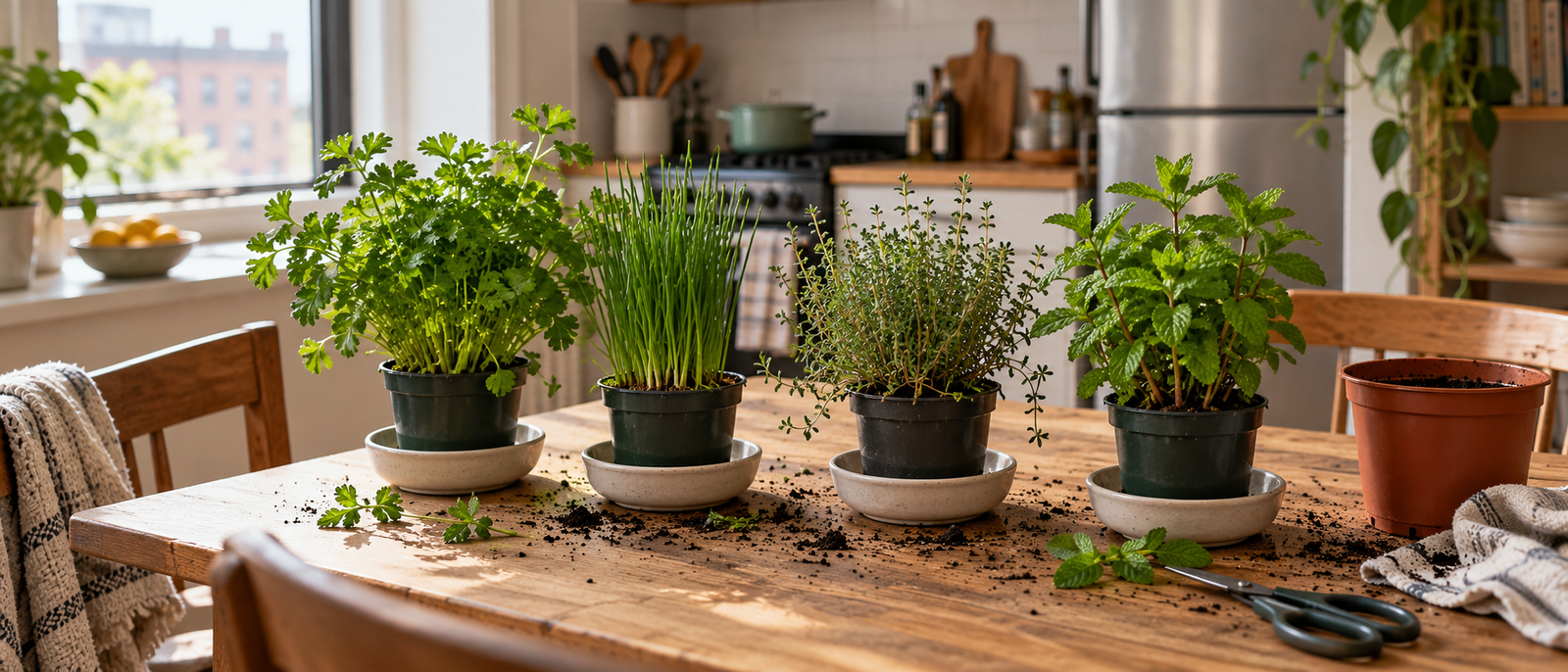
For a winter herb garden, thyme, mint, parsley, chives, oregano, and rosemary are usually more forgiving than heat-loving basil. Thyme indoors is often a practical choice because it handles container life well. Basil indoors can work, but it generally needs strong light and a warm, stable spot to stay productive. For more plant-specific guidance, see the University of Minnesota Extension’s advice on growing herbs in home gardens.
- Choose pots with drainage holes: drainage holes let extra water leave the pot instead of sitting around the roots.
- Use saucers: a saucer protects windowsills, shelves, and floors from drips.
- Use potting mix: potting mix is lighter than garden soil, which can compact in containers like wet clay in a coffee mug.
- Use cachepots carefully: a cachepot is a decorative outer pot. It works only if the nursery pot inside can drain and you empty collected water.
Typical indoor temperatures are usually workable, but placement matters. Do not press herbs against freezing glass or park them beside a radiator, forced-air vent, stove, or other direct heat source.
Give winter herbs enough light without damaging the apartment
Light is often the main winter limit for renters, especially after you have found a spot away from cold glass and direct heat. A sunny south-facing window is the best natural-light option, but many apartments do not get six hours of sun in winter because of nearby buildings, short days, deep window frames, or privacy blinds.
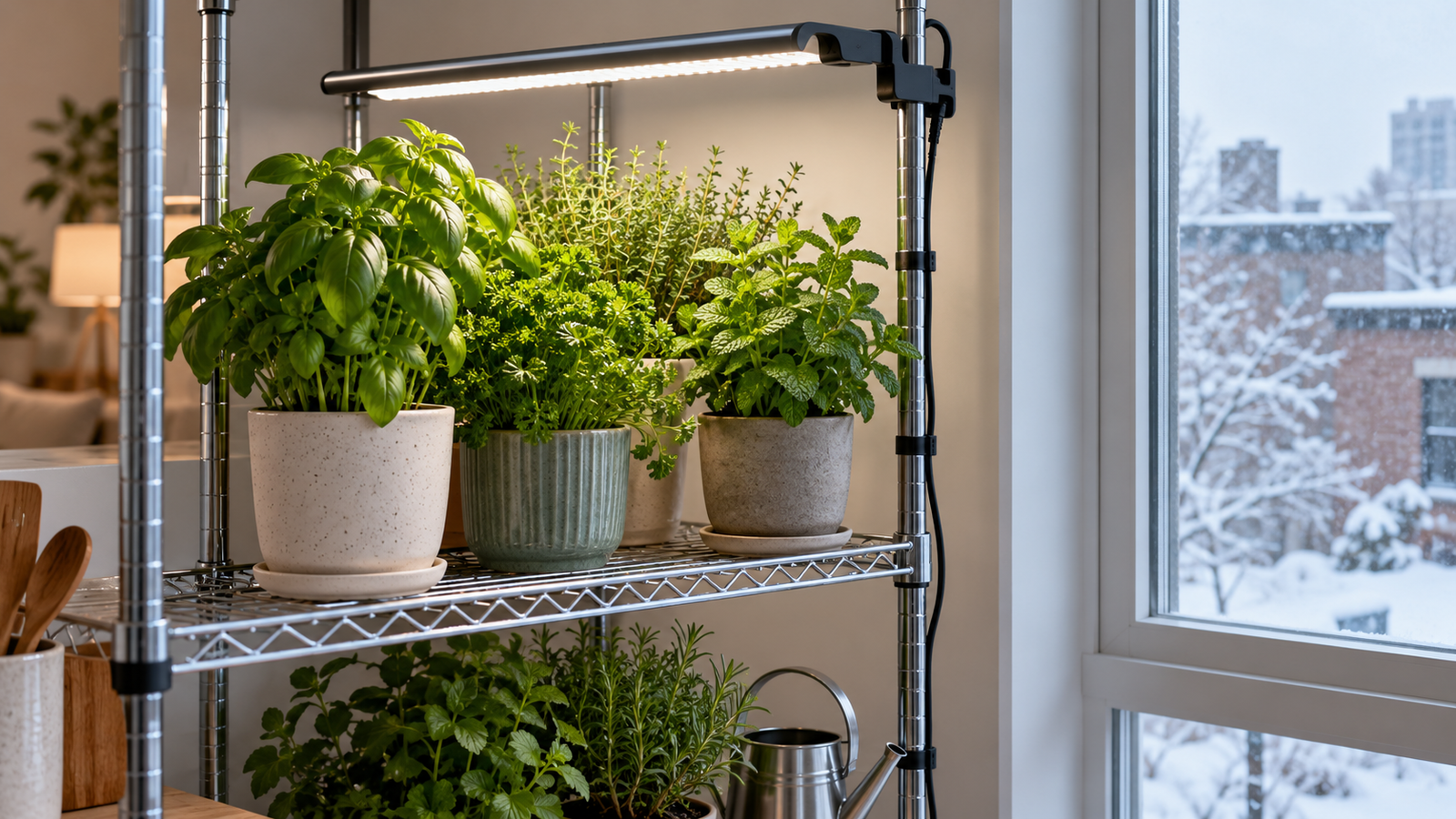
Use the plant as your light meter. Pale leaves, long stretched stems, leaning growth, and very slow regrowth after cutting all suggest that supplemental lighting may help. Supplemental lighting means adding artificial light to support plant growth. For renters, plug-in LED grow lights are usually the simplest low-commitment option.
- Start with the brightest safe window. Keep leaves off cold glass and protect the sill with a tray or saucer.
- Add grow lights if growth looks weak. Use a plug-in LED fixture rather than anything that requires drilling or rewiring.
- Put the light on a timer. Aim for a long daily light period, then turn it off so plants still get a dark rest period.
- Watch the leaves, not just the lamp. If leaves fade, crisp, or curl, raise or reduce the light according to the fixture guidance.
- Rotate pots regularly. Rotation keeps one side from stretching toward the window like a person leaning toward a space heater.
No single lamp distance fits every fixture. Follow the grow light manufacturer’s guidance, then adjust based on the plant’s response.
Water less often than you think, then adjust for dry winter air
After dialing in light, the best answer to how often to water indoor herbs in winter is to check the potting mix first. Herbs usually use water more slowly in winter because light and growth are reduced, so a fixed calendar can drown roots even when the room feels dry.
- Touch the mix. For most herbs, water when the top inch of potting mix feels dry.
- Water thoroughly. Add water until excess runs from the drainage holes.
- Empty the saucer. Do not let the pot sit in runoff. Wet roots need air as well as moisture.
- Check again before repeating. A small pot in dry indoor air may dry faster than a larger pot on a cool windowsill.
Overwatered herbs often look limp even when the mix is wet, and leaves may yellow. Underwatered herbs usually have dry mix, drooping stems, and crisp leaf edges. Because the symptoms can overlap, the finger test matters.
Winter humidity is a separate issue from root watering. Dry indoor air can stress tender leaves, especially near heat sources. To raise humidity around an indoor herb garden, cluster plants together, run a humidifier near plants, or mist herb plants lightly for short-term relief.
- Do not use misting as watering. Mist wets leaves; it does not reliably hydrate roots.
- Keep air moving. Constantly wet leaves in still air can encourage mildew.
- Fertilize lightly, if at all. If herbs are actively growing under strong light, use diluted water-soluble fertilizer sparingly. If growth has slowed, skip fertilizer or use much less.
Conclusion
The renter-friendly formula is simple: choose manageable herbs, use pots that drain, place them in the brightest safe spot, add grow lights only when plants show they need help, and water by checking the mix. If your apartment has almost no usable light, the advice changes: lighting becomes essential, not optional.
Start with two or three herbs and harvest lightly. Even a modest indoor herb garden can supply garnishes, tea leaves, and small recipe additions. If you want to expand outdoors later, read our balcony herb garden guide.
Leave a Reply